




The normalisation of lower interest rates since mid-2024 has exposed the fragility of business models built predominantly on balance sheet spreads. With net interest margins under sustained compression, banks can no longer rely on the structural tailwind of wide lending-deposit differentials to drive profitability. Rather than simply waiting for rate conditions to improve, leading institutions are repositioning themselves to better monetise the full breadth of client flows.
This monetisation drive spans payments, deposit activity, transactional data, and — critically — deeper engagement with existing customers. A client relationship that generates fee income, advisory mandates, and transactional volume is inherently more resilient than one captured solely through an asset spread.
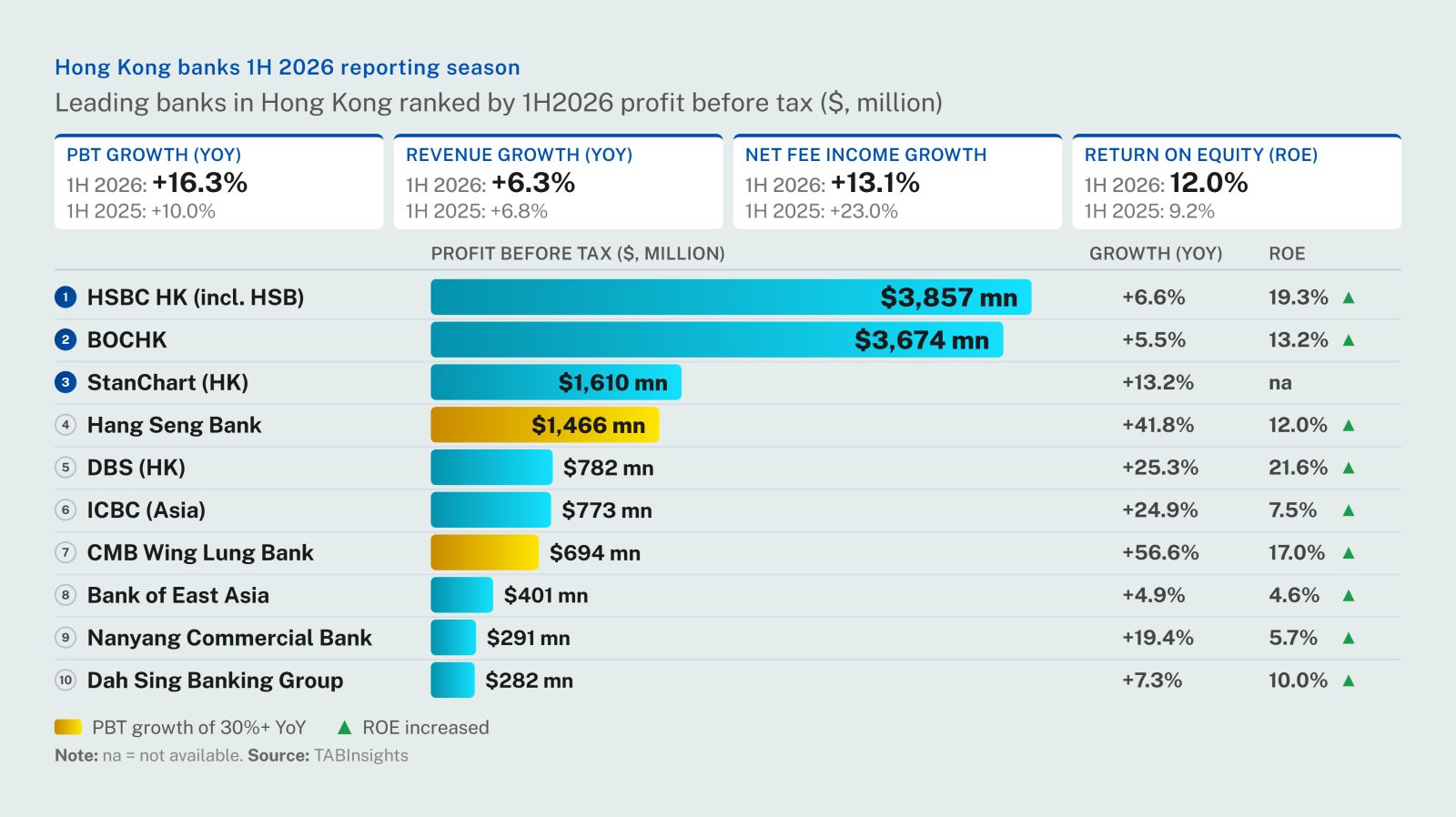
Diversification of income across retail, wealth, and small business banking remains a core strategy, but the emphasis has evolved. It is no longer sufficient to operate across multiple segments in parallel. The competitive advantage today lies in integration — building a seamless client journey that moves coherently from everyday banking and deposits through to investment advisory and wealth management. Retail banks in Hong Kong and Singapore, including Bank of China Hong Kong and DBS have emerged as particularly lead examples, demonstrating that a unified retail, SME, and wealth continuum can drive sustainable growth even in a lower-rate environment.
Deposits as the gateway to engagement
Perhaps the most significant strategic reappraisal in recent years has been the reassessment of the deposit franchise. For much of the post-global financial crisis period, deposits were managed primarily as a funding mechanism — a source of balance sheet liquidity to support loan growth. That framing is now giving way to something more expansive.
Leading banks are increasingly treating deposits as the entry point to a broader client relationship, and as a primary channel through which wealth products and investment services are distributed. The focus on cultivating primary accounts and payroll relationships reflects this logic: a client whose salary flows through the bank is a client whose financial life — savings, investments, protection, credit — can be served holistically.
Enterprise AI: from experimentation to structural capability
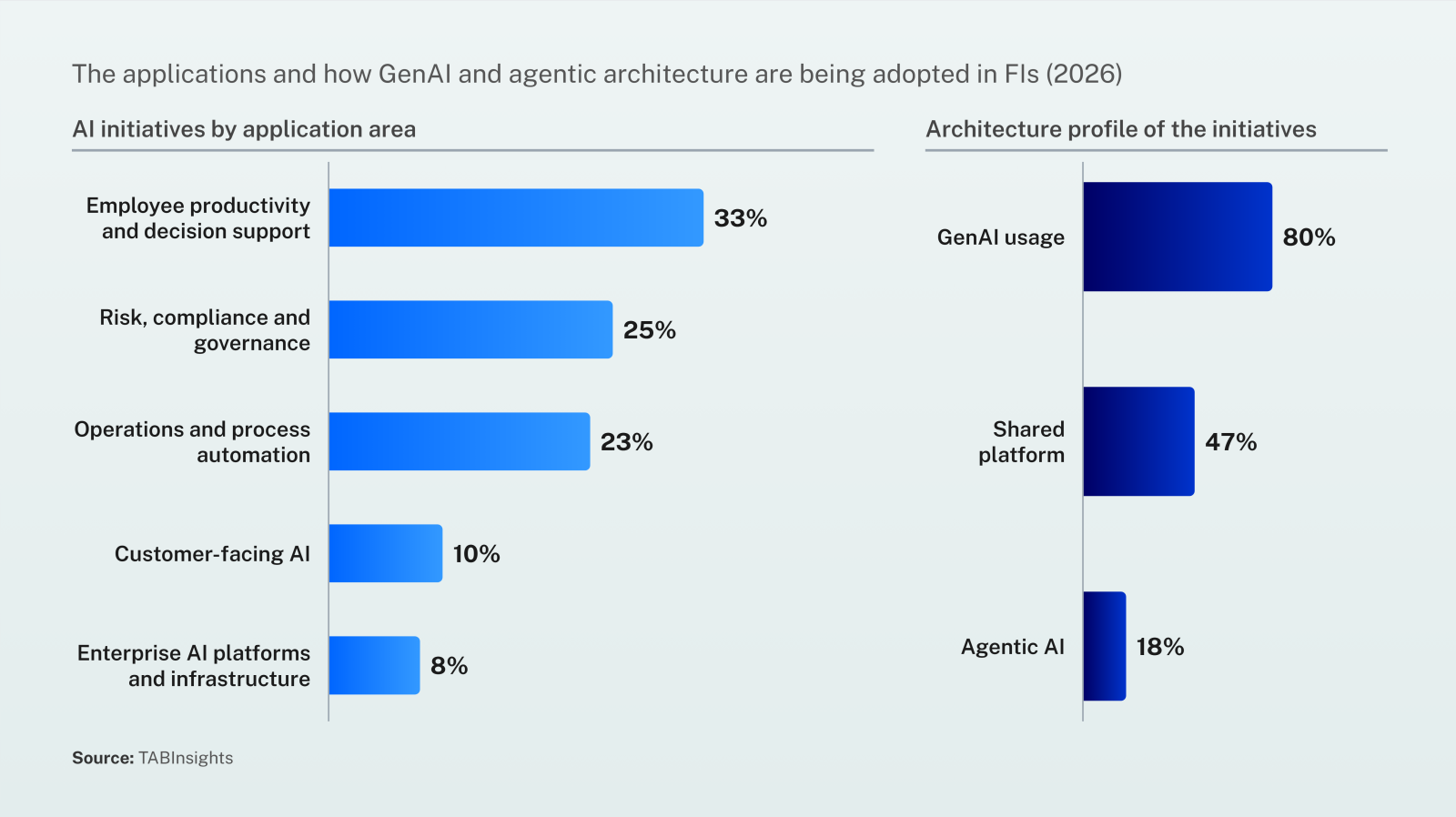
The industry is now seven years into its generative AI journey, and the character of investment and deployment has shifted materially. The early phase was defined by quick wins — identifying discrete applications where AI could deliver quick productivity gains or cost reductions.
Banks at the frontier have progressed toward building enterprise-wide AI capabilities — systemic platforms that embed intelligence across credit decisioning, client servicing, fraud detection, operational workflows, and internal knowledge management. The distinction matters. Point solutions can improve a specific process; enterprise AI platforms can reshape the economics of the entire operating model.
The implications extend across the client relationship as well. Credit scoring that draws on behavioural and transactional data beyond traditional financial histories, advisory services that extend beyond product sales, and personalised engagement delivered at scale — these capabilities are moving from pilots to deployment. The banks that build robust data infrastructure and translate it into AI-powered relationship management will hold a durable competitive advantage in the years ahead.
Stablecoins in retail banking at the threshold of mainstream finance?
A major theme emerging from the Global Excellence Programme 2026 is the gradual integration of digital assets within regulated financial markets. Banks, regulators, and financial hubs are engaging across the full digital asset spectrum — tokenised deposits, real-world assets, CBDCs, and stablecoins — each at a different stage of maturity, though the overall scale of transactions to traditional finance remains modest. By comparison, JP Morgan processes ~$5 billion in tokenised payments daily versus $10 trillion in traditional payments.
With a more permissive US regulatory environment since 2025, stablecoins have seen increasingly a row of institutional adoption in 2025 too, particularly among fintechs, platforms, and digital banks.
But of the approximately $62 trillion in gross stablecoin volume, a BCG's analysis found that only around $4.2 trillion represents real economic activity — and of that, just $350 to $550 billion constitutes actual payments. That is less than one percent of the headline figure. Real growth is running at around 60% annually, but from a small base and concentrated in high-friction B2B settlement, remittances, and digital services — not mainstream consumer payments yet though there are emerging pockets in Africa and South America.
The infrastructure race
What makes the current moment strategically significant is the infrastructure being laid down for future scale. Visa went live with stablecoin-backed cards, PayPal expanded its PYUSD stablecoin to 70 countries, and Mastercard acquired stablecoin infrastructure firm BVNK for $1.8 billion rather than building the capability in-house. This convergence between DeFi and traditional finance is already happening in parts of the industry, reflecting a path among the world's largest payments networks that stablecoin rails will become a meaningful part of the global payments stack.
The competitive dynamic is also playing out within banking. SoFi Bank, among the most successful digital banks in the US, rolled out a new enterprise platform to allow clients to manage both fiat and crypto within the same regulated institution. In South America, where more than 58 million users hold some kind of digital money, with a 12% adoption rate according to Coinchange, USDC adoption at NuBank has been broad, spanning all customer segments, with 25% of beginners on Nubank choosing USDC as their first crypto purchase.
Risk, regulation, and the strategic posture for banks
The US legislative picture on stablecoins remains unsettled. The GENIUS Act has advanced the debate, but key questions around yield-bearing stablecoins, staking definitions, and the competitive implications for bank deposits are unresolved. Banks worry that yield-like stablecoin products could erode their funding base; crypto firms want the ability to offer competitive incentives. The final regulatory framework will materially shape which business models survive.
The majority of incumbents remain cautious on stablecoins. Key concerns include cross-border regulatory fragmentation, KYC/AML compliance across jurisdictions, network congestion and pricing, bridge security vulnerabilities, legal ambiguity around accountability, and inconsistent redemption periods, making widespread institutional adoption complex and challenging. Banks are monitoring the stablecoin space, even as they expand its digital assets offerings and tokenised deposits for institutional investors and in corporate banking, but are unlikely to make any significant moves in retail banking in 2026.
Customer experience and engagement has sat near the top of banking priority lists for years. What is different in 2026 is the infrastructure available today to act on it. Banks today have a fundamentally different quality of digital distribution, data capability, and AI tooling at hand. The question driving leading banks is no longer how to build experiences that are technically powerful, but how to build ones that are genuinely user-led — creating real value for the client rather than optimising for internal efficiency metrics.
From multichannel access to integrated intelligence
The clearest structural shift underway is banks moving from providing more access — towards integration, real-time insight, and smarter engagement. Every click, payment, and customer query now feeds a live preference model. By combining transactional, behavioural, operational, and sentiment data, banks can predict customer needs before they are articulated, preempt service gaps, and resolve issues faster than traditional batch-process approaches allowed.
Organisationally, customer experience has also been elevated. It has evolved from a narrower UX discipline into a managed business asset, governed through structured frameworks built around four principles: being present, being personalised, being proactive, and operating through partnerships. The metrics that matter have shifted away from operational indicators — logins per month, resolution time, NPS scores — toward hard commercial outcomes: AUM growth, card usage, cross-sell ratios, and improved unit economics. Experience is now assessed in terms of the value it generates, not merely the satisfaction it produces.
Customer-led personalisation as the next frontier
Much of what banks have built in recent years around real-time interaction management — replacing traditional batch campaigns with live decision-making based on transaction and behavioural signals — remains, in practice, sophisticated guesswork. Banks infer what customers want and act on those inferences. The customer remains largely passive in the process.
What is emerging on the horizon suggests this dynamic is about to shift. OpenClaw, the open-source agentic platform that swept China and captured the attention of the global technology community, offers an early signal of what deep personalisation could look like when customers are active participants. The open-source platform enables AI assistants to browse the web, execute tasks, send messages, and interact with digital environments autonomously — and its implications for banking are significant.
Rather than banks pushing personalised offers based on modelled preferences, the next phase may involve customers negotiating directly with bank AI agents to define the products and services they want. Preferences would be communicated explicitly rather than inferred probabilistically. The result is a more direct and genuinely tailored experience — one where relevance is defined by the customer, not approximated by the institution.
The productivity plateau and what comes next
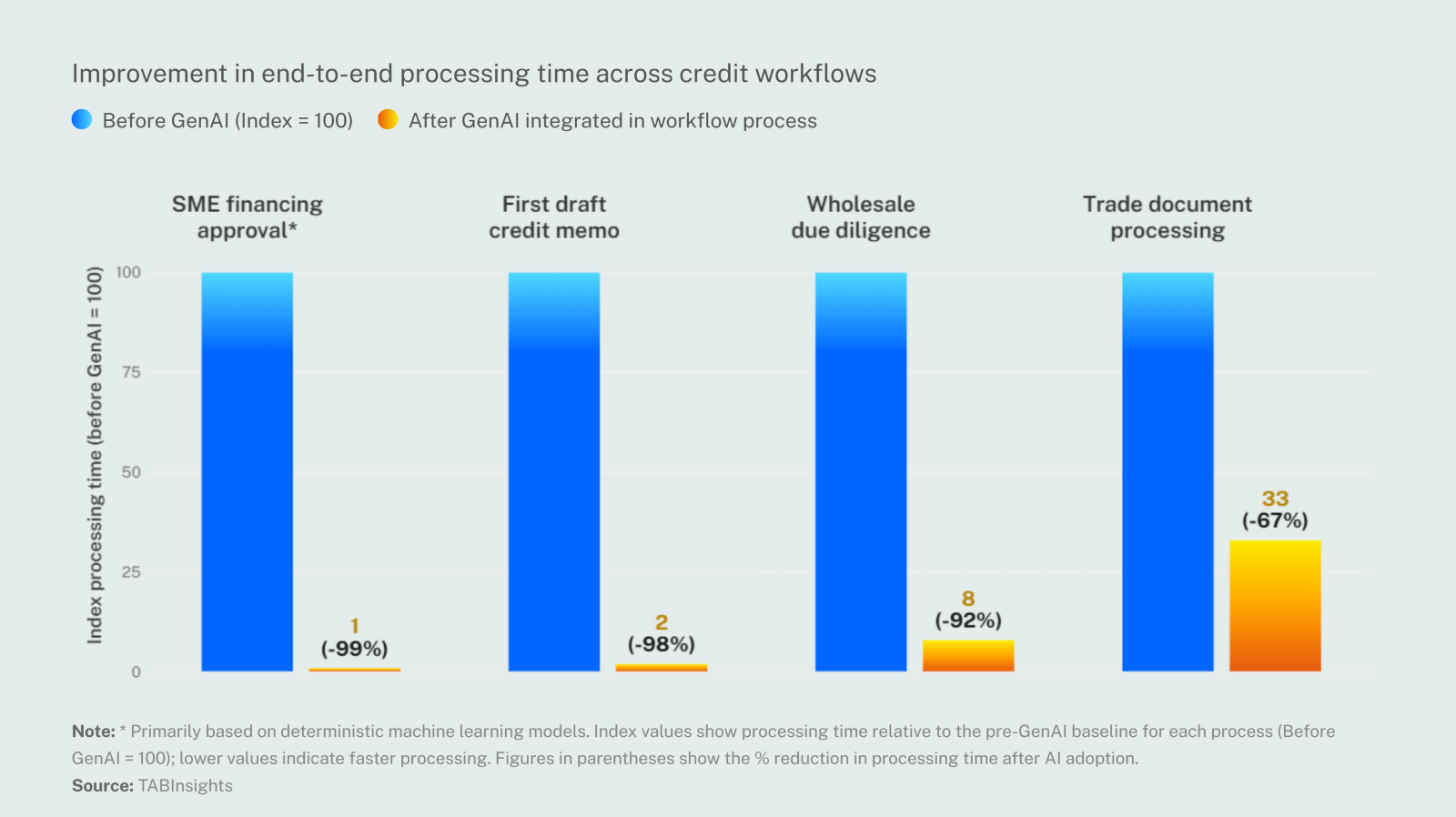
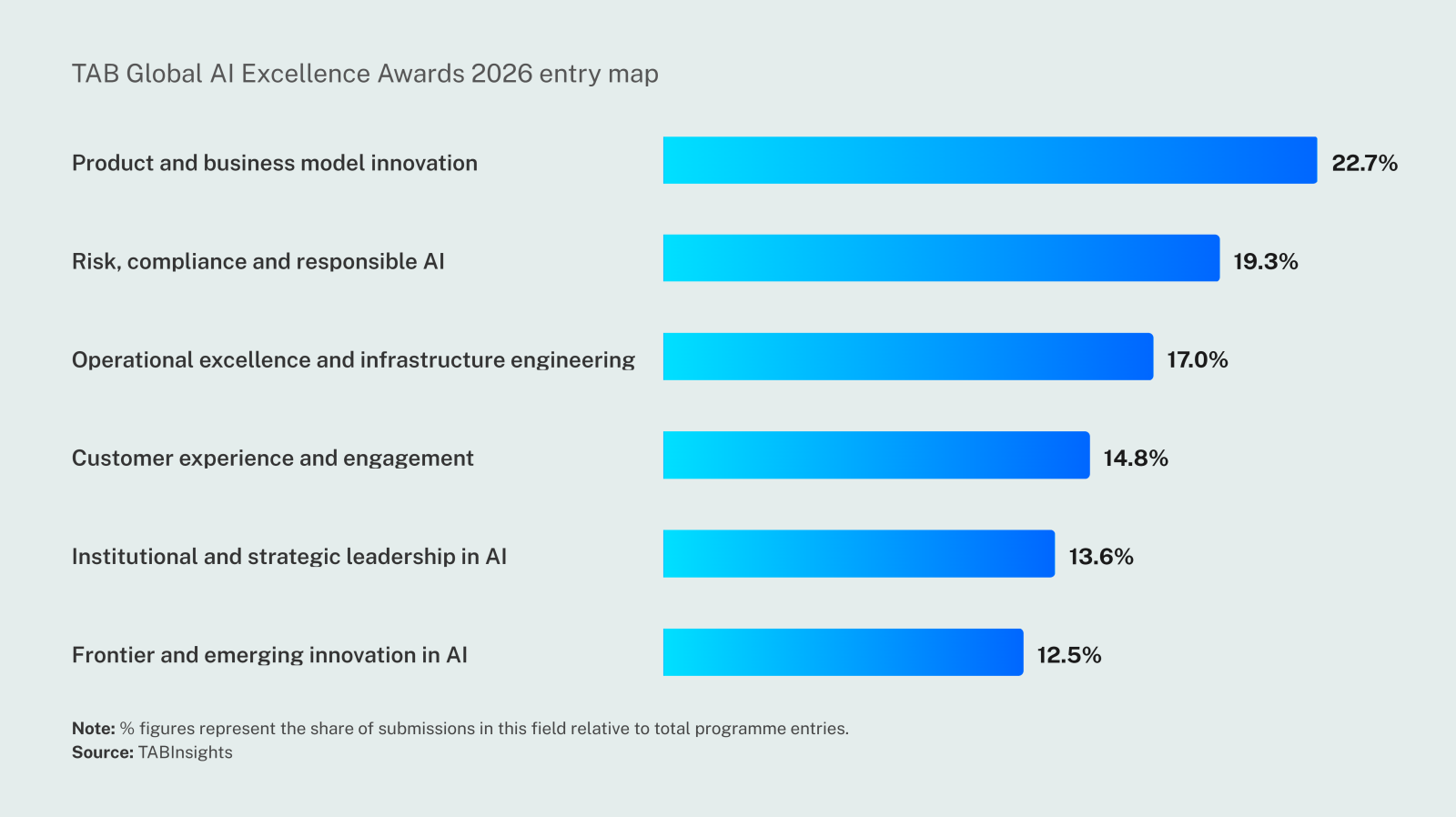
Generative AI has seen the second most fielded entries in this year’s programme. For the majority of banks, AI remains primarily an efficiency and productivity play. Processes that once took months now take days; tasks that took days now take minutes. Back-office operations have been genuinely transformed. But cost reduction and capacity expansion, while valuable, are not GenAIs full promise.
The distinction worth drawing is this: the true value of AI is not automation. It is the ability to change frontline behaviour, deepen client interaction, and enable organisations to adapt faster in a world that is moving quickly. On those dimensions, progress has been slower. Customers rarely feel the advancement in any direct or tangible way, and the measurable economic value created at enterprise scale remains, for most institutions, largely immaterial. The full financial benefits are still projected rather than realised — and bank executives have been candid about the difficulty of measuring impact on an enterprise scale. DBS in Singapore offered one of the more concrete data points in 2025, reporting $1 billion in economic value generated from AI — but the bulk of that figure derives from traditional rules-based machine learning, which can be tracked through controlled A/B testing. The impact of generative AI, embedded across enterprise systems and day-to-day operations, remains far harder to isolate and attribute.
The workforce implications are beginning to crystallise, even if the full picture remains uncertain. JP Morgan Chase & Co's CEO of Consumer & Community Banking Marianne Lake has pointed to a potential ten percent reduction in operations headcount as AI tools mature, with back- and middle-office roles, along with risk and compliance functions, most exposed.
The more immediate strategic question for banks is where AI goes next. The efficiency gains are real but increasingly competed away. The next evolution — customer-facing intelligence that generates new services and new experiences, rather than simply reducing the cost of existing ones — is where durable competitive advantage will be built. The banks that will lead aren't the ones that automated the most processes. They're the ones that used AI to change how decisions get made, how advisors show up for clients, how the rewire their operating system and how customers experience their finances day to day. That's where the value is — and that's where the race is heading.


Banner.png)


.png)






 Google
  LinkedIn